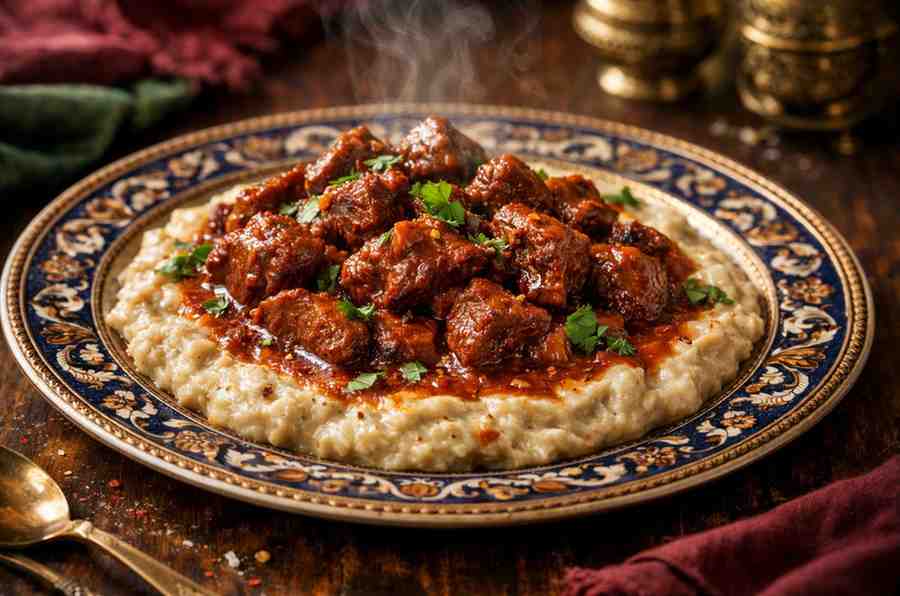
Few dishes carry the poetic charm and historical richness of Hünkar Beğendi, a beloved classic of Turkish cuisine whose name literally translates to “The Sultan Liked It.” This iconic dish is more than just a meal—it is a story of royal taste, culinary innovation, and the blending of cultures that defined the Ottoman Empire. With its velvety smoked eggplant purée topped with tender meat stew, Hünkar Beğendi continues to enchant food lovers across the world.
A Dish Born for Royalty
The origins of Hünkar Beğendi are steeped in legend. It is often said that the dish was first prepared in the 19th century for an Ottoman sultan, possibly during a visit from European royalty. One popular tale suggests that it was created to impress Empress Eugénie of France when she visited Istanbul. Ottoman chefs, already masters of their craft, combined local ingredients with French culinary techniques to create something extraordinary—and the result was a dish so delicious that the sultan himself approved with delight.
Whether or not the story is entirely factual, the dish reflects a period when Ottoman cuisine was evolving, incorporating influences from Europe while preserving its own rich traditions.
What Makes Hünkar Beğendi Special?
At its core, Hünkar Beğendi is a harmonious pairing of two distinct elements:
1. The Eggplant Purée (Beğendi)
The base of the dish is a creamy, smoky eggplant purée. Eggplants are typically roasted over an open flame, which imparts a deep, slightly charred flavor. Once softened, the flesh is mashed and blended with butter, flour, milk, and cheese to create a silky, almost soufflé-like consistency.
The smokiness is key—it adds depth and complexity, turning a simple vegetable into something luxurious.
2. The Meat Topping
Traditionally, the purée is topped with a rich lamb stew, slow-cooked until the meat becomes melt-in-your-mouth tender. The stew is usually flavored with onions, tomatoes, garlic, and a blend of spices that enhance rather than overpower the dish.
While lamb is the classic choice, modern variations may use beef or even chicken, depending on preference.
A Balance of Texture and Flavor
What truly elevates Hünkar Beğendi is the contrast it delivers. The creamy, buttery eggplant purée acts as a smooth canvas for the robust, savory meat. Each bite offers a balance of:
- Smoky and creamy notes from the eggplant
- Rich and hearty flavors from the stew
- Subtle hints of spice and sweetness
It’s a dish that feels both comforting and refined—simple in concept, yet sophisticated in execution.
Cultural Significance
Hünkar Beğendi represents more than just a recipe; it symbolizes the grandeur of Ottoman palace kitchens, where chefs were expected to innovate constantly and impress the elite. Food was not merely sustenance—it was an expression of power, artistry, and hospitality.
Today, the dish is a staple in Turkish cuisine, often served in traditional restaurants and during special occasions. It bridges the past and present, allowing people to experience a taste of imperial history.
Modern Interpretations
While the traditional recipe remains beloved, chefs around the world have put their own spin on Hünkar Beğendi. Some variations include:
- Using different proteins like chicken or seafood
- Adding modern plating techniques for a fine-dining presentation
- Experimenting with spices or incorporating regional ingredients
- Vegetarian versions using mushrooms or legumes instead of meat
Why You Should Try It
If you appreciate dishes that tell a story, Hünkar Beğendi is a must-try. It’s perfect for those who enjoy:
- Comfort food with a gourmet touch
- Smoky, creamy textures paired with rich stews
- Exploring historical and cultural cuisines
It’s also surprisingly approachable for home cooks willing to invest a bit of time, especially in achieving that signature smoky eggplant flavor.
Final Thoughts
Hünkar Beğendi is not just “food that a sultan liked”—it’s food that continues to captivate generations. It embodies the essence of Turkish culinary heritage: bold yet balanced, simple yet elegant, traditional yet adaptable.
In every spoonful, you taste history, craftsmanship, and a deep appreciation for flavor. Whether enjoyed in a bustling Istanbul eatery or recreated in your own kitchen, this dish invites you into a world where food is both art and legacy.