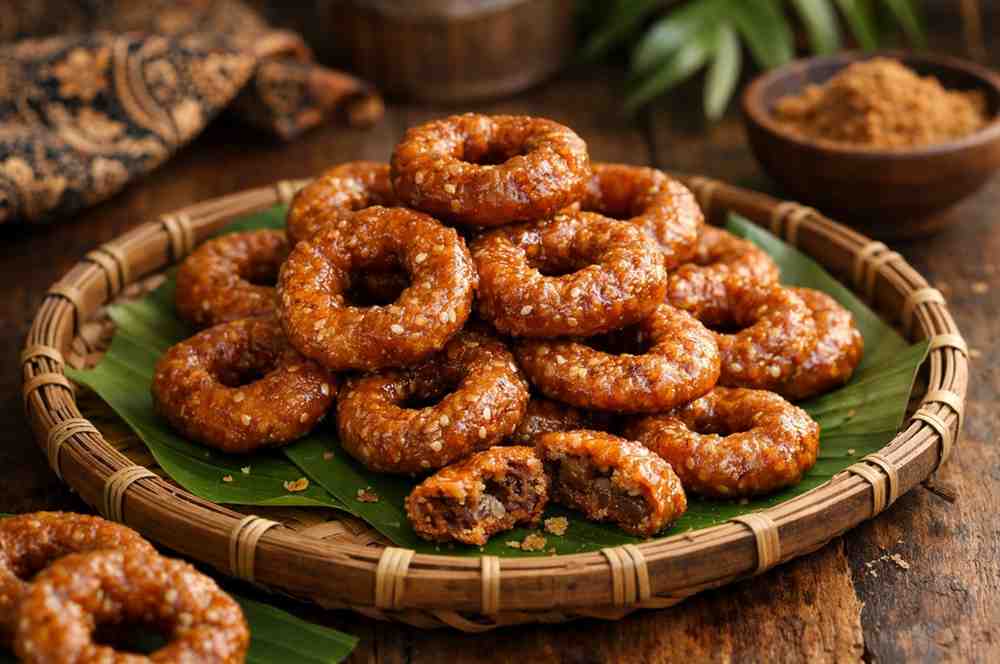
Among the many treasures of Southeast Asian desserts, Kuih Cincin stands out as a humble yet deeply cultural delicacy. Its name literally translates to “ring cake”—a nod to its distinctive donut-like shape—but behind this simple appearance lies a rich story of heritage, craftsmanship, and regional identity.
Crispy on the outside, slightly chewy on the inside, and infused with the caramel-like sweetness of palm sugar, Kuih Cincin is a snack that connects generations across the island of Borneo.
Roots in Borneo’s Culinary Heritage
Kuih Cincin is most closely associated with the Malaysian state of Sabah, located on the island of Borneo. It is especially popular among local communities and is often sold in traditional markets, roadside stalls, and festive gatherings.
This kuih (a Malay term for bite-sized snacks or desserts) reflects the resourcefulness of local cooking—using readily available ingredients like rice flour, palm sugar, and water to create something both delicious and long-lasting.
What Is Kuih Cincin Made Of?
At its core, Kuih Cincin is beautifully simple. Its main ingredients include:
- Rice flour – gives structure and a slightly chewy texture
- Palm sugar (gula Melaka) – provides deep, smoky sweetness
- Water – to bind the dough
- Oil – for deep frying
The dough is shaped into small rings—traditionally by hand—and then deep-fried until golden brown.
The Signature Shape and Texture
The ring shape is not just aesthetic—it plays a role in the texture and cooking process.
- The thin loops allow the dough to fry evenly
- The outer layer becomes crisp and crunchy
- The inside remains slightly dense and chewy
The result is a delightful contrast that makes Kuih Cincin incredibly satisfying to bite into.
A Snack with Cultural Meaning
Kuih Cincin is more than just a treat—it carries cultural significance. It is often prepared during festivals, family gatherings, and community events, symbolizing unity and continuity (much like its circular shape).
In many households in Malaysia, recipes are passed down through generations, with each family adding its own subtle touch—whether in sweetness, thickness, or frying technique.
Traditional Craftsmanship
One of the most fascinating aspects of Kuih Cincin is how it is made. Skilled makers can shape the rings quickly and consistently, often using their fingers or simple tools to create intricate loops.
This process requires:
- Practice and precision
- A good sense of dough consistency
- Timing during frying to achieve the perfect color
Watching Kuih Cincin being made is almost like watching edible artistry in motion.
Modern Variations
While the traditional version remains the most beloved, modern adaptations have emerged:
- Using different types of sugar for varied sweetness
- Adding sesame seeds for extra texture
- Experimenting with flavors like pandan or coconut
Despite these innovations, the essence of Kuih Cincin—its simplicity and cultural roots—remains intact.
When and How It’s Enjoyed
Kuih Cincin is typically enjoyed as:
- A tea-time snack
- A festive treat during celebrations
- A travel-friendly nibble due to its long shelf life
Its crunchy texture and rich sweetness make it perfect alongside a cup of tea or coffee.
Why Kuih Cincin Deserves More Recognition
Unlike globally famous desserts, Kuih Cincin remains relatively under the radar. Yet, it embodies everything that makes traditional food special:
- Simplicity of ingredients
- Depth of flavor
- Cultural storytelling
- Handmade authenticity
It’s a reminder that some of the most meaningful culinary experiences come from everyday traditions rather than grand kitchens.
Final Thoughts
Kuih Cincin may look modest, but it carries the spirit of Borneo in every bite. From the bustling markets of Sabah to family kitchens across Malaysia, this golden ring-shaped snack continues to bring people together.
In a fast-changing world, Kuih Cincin stands as a delicious link to the past—crispy, sweet, and timeless.