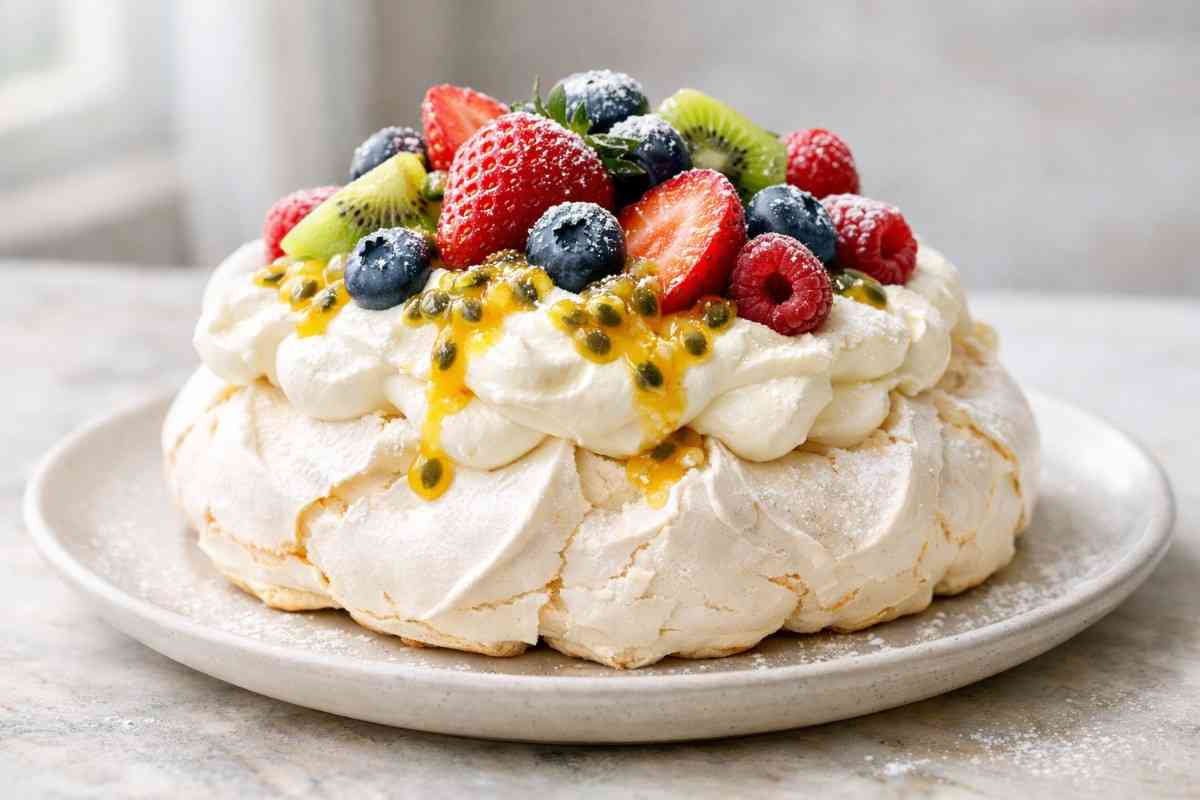
Few desserts feel as light, elegant, and celebratory as Pavlova. With its crisp meringue shell, marshmallow-soft interior, and crown of whipped cream and fresh fruit, Pavlova is a showstopper that somehow manages to be both simple and sophisticated. Named after a legendary ballerina, this dessert captures grace not just in its appearance—but in every bite.
A Dessert Inspired by a Dancer
Pavlova is named after Anna Pavlova, one of the most famous ballet dancers of the early 20th century. During her tours in Australia and New Zealand, chefs were inspired by her ethereal presence and created a dessert meant to reflect her lightness and elegance.
To this day, both Australia and New Zealand proudly claim to be the birthplace of Pavlova—a friendly culinary rivalry that continues to spark debate. Regardless of its exact origin, the dessert has become a staple in both countries, especially during festive occasions.
What Makes Pavlova Unique?
At first glance, Pavlova may resemble a typical meringue dessert—but it has a distinctive character that sets it apart.
1. The Meringue Base
The foundation is a baked meringue made from whipped egg whites and sugar. What makes Pavlova special is its texture:
- A crisp, delicate outer shell
- A soft, marshmallow-like center
This contrast is achieved by carefully controlling baking time and temperature, allowing the inside to remain tender while the outside firms up.
2. The Creamy Topping
Once cooled, the meringue is topped with lightly sweetened whipped cream. The cream adds richness and balances the sweetness of the meringue, creating a harmonious flavor profile.
3. Fresh Fruit Garnish
Pavlova is traditionally adorned with fresh fruits such as:
- Strawberries
- Kiwi
- Passionfruit
- Berries
The fruit provides a burst of freshness and acidity, cutting through the sweetness and adding vibrant color.
A Symphony of Texture and Flavor
Pavlova is beloved because of the experience it offers:
- The crack of the crisp shell
- The melt-in-your-mouth softness of the center
- The light creaminess of whipped cream
- The juicy brightness of fruit
It’s a dessert that feels airy yet indulgent—perfect after a heavy meal or as the centerpiece of a celebration.
Cultural Significance
In both Australia and New Zealand, Pavlova is more than just a dessert—it’s a tradition. It often appears during holidays like Christmas, where it’s served as a refreshing alternative to heavier sweets in the summer heat (since Christmas falls during summer in the Southern Hemisphere).
Families often have their own variations, passed down through generations, making Pavlova a deeply personal and nostalgic dish.
Modern Twists on a Classic
While the traditional Pavlova remains iconic, modern chefs and home bakers have experimented with creative variations:
- Chocolate Pavlova with cocoa-infused meringue
- Mini Pavlovas for individual servings
- Tropical versions with mango and coconut
- Savory-inspired presentations with less sugar and unique toppings
Tips for Making the Perfect Pavlova
If you’re inspired to try making Pavlova at home, here are a few key tips:
- Ensure your mixing bowl is completely clean and grease-free
- Whip egg whites to stiff peaks gradually
- Add sugar slowly to achieve a glossy texture
- Bake at a low temperature to avoid cracking
- Let it cool in the oven to prevent collapse
Patience is key—but the reward is well worth it.
Why Pavlova Endures
Pavlova has stood the test of time because it captures something universal: the joy of contrast. It’s crisp yet soft, sweet yet fresh, simple yet elegant. It’s a dessert that feels celebratory without being overwhelming.
Much like Anna Pavlova herself, the dessert is remembered for its grace, beauty, and unforgettable presence.
Final Thoughts
Pavlova is more than just a dessert—it’s an edible tribute to artistry and balance. Whether you enjoy it at a festive gathering or make it from scratch in your kitchen, it offers a moment of lightness and delight.
In a world of rich, heavy sweets, Pavlova reminds us that sometimes the most memorable experiences come from something that feels almost weightless—yet leaves a lasting impression.